Competitor Analysis AI Automation Market Research n8n

Analyze brand competitors using Decodo, Gemini, Telegram and Google Sheets

Automated workflow to track competitors, extract insights with AI, and organize findings in real-time

Download Template JSON · n8n compatible · Free
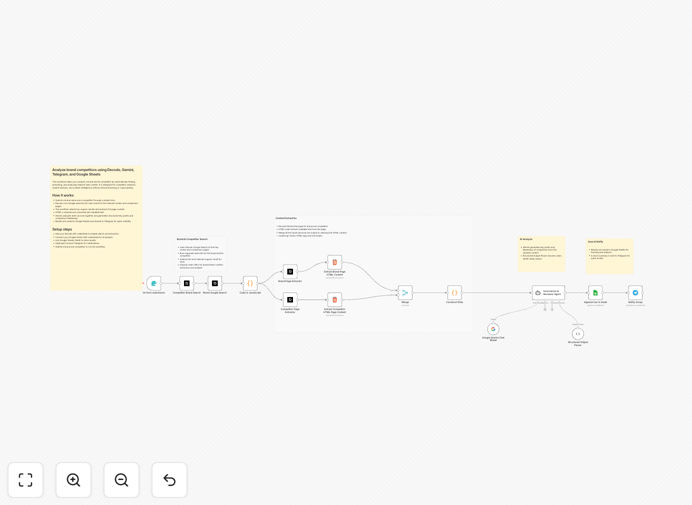
Competitor analysis workflow diagram showing Decodo, Gemini AI, Telegram and Google Sheets integration

What This Workflow Does

This automated workflow helps businesses systematically track and analyze competitors by combining web scraping, AI analysis, and real-time reporting. It pulls competitor data from various sources using Decodo, processes the information with Google's Gemini AI to extract strategic insights, sends alerts via Telegram for immediate awareness, and organizes all findings in Google Sheets for long-term tracking.

The solution eliminates manual competitor monitoring, which typically requires hours of research across multiple platforms. Instead, it delivers structured, actionable intelligence about competitor activities, pricing changes, marketing strategies, and market positioning - all updated automatically on your schedule.

How It Works

1. Data Collection with Decodo

The workflow begins by extracting competitor data from websites, social media, and review platforms using Decodo's web scraping capabilities. It can monitor product pages, pricing changes, content updates, and customer sentiment across multiple competitors simultaneously.

2. AI Processing with Gemini

Raw data is then sent to Google's Gemini AI for analysis. Gemini identifies patterns, extracts key insights, and summarizes findings in business-friendly reports. It can detect shifts in marketing strategy, product positioning, or customer perception that might require your attention.

3. Real-time Alerts via Telegram

Critical findings are immediately sent to your Telegram channel as alerts. This ensures your team stays informed about important competitor movements without having to check reports manually. The alerts include direct links to the full analysis in your Google Sheets.

4. Structured Storage in Google Sheets

All processed data is organized in a structured Google Sheet that serves as your competitor intelligence hub. The sheet includes timestamped entries, categorized insights, and visual comparisons that make trend analysis simple.

Who This Is For

This workflow is ideal for marketing teams, product managers, and business strategists who need to stay ahead of competitors. Ecommerce brands, SaaS companies, and digital agencies will benefit most from this automated competitive intelligence system.

It's particularly valuable for businesses in fast-moving industries where competitor actions can significantly impact market position. Teams that previously relied on manual competitor tracking will save 10-15 hours per week while getting more comprehensive insights.

What You'll Need

  1. n8n account (self-hosted or cloud)
  2. Decodo account with API access
  3. Google Gemini API key
  4. Telegram bot token
  5. Google Sheets with edit permissions

Pro tip: Set up separate Telegram channels for different alert types (pricing changes, product updates, marketing campaigns) to help your team prioritize responses.

Quick Setup Guide

  1. Download the JSON template file
  2. Import into your n8n instance
  3. Connect your Decodo, Gemini, Telegram, and Google Sheets accounts
  4. Configure competitor URLs and tracking parameters
  5. Set your preferred analysis frequency (daily/weekly)
  6. Test with 1-2 competitors before scaling up

Key Benefits

Save 80% of competitor research time by automating data collection and analysis that would normally require manual work across multiple platforms.

Get AI-powered strategic insights that go beyond surface-level data, helping you understand the "why" behind competitor actions.

React faster to market changes with real-time Telegram alerts when competitors make significant moves.

Build a historical intelligence database in Google Sheets that helps identify long-term competitor patterns and strategies.

Scale competitor tracking effortlessly by adding new competitors or data points without additional manual work.

Frequently Asked Questions

Common questions about competitor analysis automation

Automated competitor analysis provides consistent, comprehensive insights without manual effort. Traditional methods often miss subtle changes or require excessive time across multiple platforms. Automation captures all relevant data points systematically and applies AI to surface meaningful patterns you might otherwise overlook.

For example, an ecommerce brand using this workflow discovered a competitor's hidden pricing strategy through automated analysis of 6 months of price fluctuations. The AI identified a pattern of temporary discounts designed to manipulate search rankings - insight that would be nearly impossible to spot manually.

  • Eliminates human bias and oversight
  • Provides 24/7 monitoring
  • Delivers structured, actionable data

AI transforms raw competitor data into strategic insights by understanding context, detecting patterns, and highlighting what matters most. While traditional analysis focuses on what competitors are doing, AI helps explain why they're doing it and predicts likely next moves.

A SaaS company used Gemini AI to analyze competitor feature updates across their blogs, release notes, and support forums. The AI identified an emerging focus on mobile capabilities 3 months before the official mobile app launch, allowing proactive strategy adjustments.

  • Processes unstructured data (reviews, social posts)
  • Identifies subtle language changes in messaging
  • Predicts future moves based on historical patterns

The workflow can monitor pricing changes, product updates, content strategies, hiring trends, customer sentiment, and marketing campaigns. Decodo's web scraping capabilities allow extraction from public websites, review platforms, job boards, and social media.

A digital agency configured the system to track 12 competitors' blog publishing frequency, content themes, and backlink strategies. The AI analysis revealed content gaps they exploited to increase their own organic traffic by 37% in one quarter.

  • Pricing and promotional changes
  • New feature releases
  • Marketing campaign themes

The workflow provides near real-time updates, with frequency configurable from hourly to weekly. Critical changes trigger immediate Telegram alerts, while comprehensive reports compile at your chosen interval. This balances timely awareness with strategic analysis.

An online retailer set daily monitoring for pricing changes during holiday seasons. The system alerted them within minutes when a major competitor dropped prices unexpectedly, allowing them to adjust their promotions before losing sales.

  • Instant alerts for critical changes
  • Configurable update frequency
  • Historical tracking for trend analysis

Yes, the workflow adapts to any industry by customizing what data to collect and how to analyze it. The AI processing can be tailored with industry-specific parameters to ensure relevant insights. You define competitor URLs and the specific elements to monitor.

A consulting firm uses the same workflow structure for clients across healthcare, fintech, and ecommerce. They simply adjust the data sources and AI prompts to focus on each industry's unique competitive factors like regulatory changes or seasonal trends.

  • Customizable data collection points
  • Adjustable AI analysis parameters
  • Flexible reporting formats

This workflow offers similar capabilities to enterprise tools at a fraction of the cost, with greater flexibility to track exactly what matters to your business. Unlike rigid SaaS platforms, you control all data sources, analysis criteria, and reporting formats.

A mid-sized manufacturer replaced their $15,000/year competitive intelligence software with this customized solution. They gained deeper insights by tracking niche industry forums and supplier relationships that generic tools ignored, while reducing costs by 90%.

  • No per-user licensing fees
  • Complete control over data sources
  • Customizable to unique business needs

Absolutely! GrowwStacks specializes in building tailored competitive intelligence systems that track exactly what matters for your specific market position. Our automation experts will design a solution that monitors your unique competitors, analyzes relevant data points, and delivers insights in your preferred format.

We've built custom competitor tracking systems for ecommerce brands tracking pricing across 50+ SKUs, SaaS companies monitoring feature adoption, and agencies analyzing content strategies across multiple client industries. Each solution focuses on delivering actionable insights specific to the business's competitive landscape.

  • Custom data sources and tracking parameters
  • Industry-specific AI analysis models
  • Integration with your existing tools

Need a Custom Competitor Analysis Integration?

This free template is a starting point. Our team builds fully tailored automation systems for your specific needs.