n8n Oxylabs GPT Research Automation AI Analysis

Automate web research & analysis with Oxylabs & GPT for comprehensive reports

Fully automate deep research from start to finish: scrape Google Search results, select relevant sources, scrape & analyze each source in parallel, and generate comprehensive reports with GPT analysis.

Download Template JSON · n8n compatible · Free
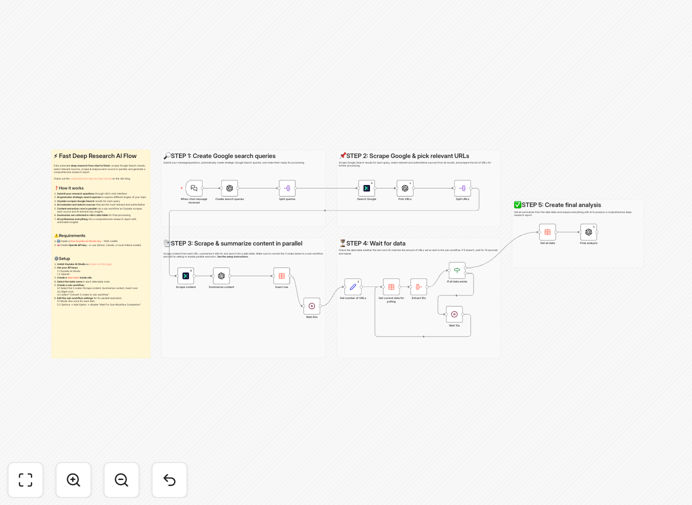
Automated web research workflow diagram showing Oxylabs scraping feeding into GPT analysis

What This Workflow Does

This automation solves the time-consuming challenge of comprehensive web research by combining Oxylabs' powerful scraping capabilities with GPT's analytical intelligence. Instead of manually searching, copying, and analyzing dozens of sources, the workflow systematically gathers, processes, and interprets web data to deliver ready-to-use reports.

The system handles the entire research pipeline: from initial search queries through source evaluation, content extraction, parallel analysis of multiple pages, and final report generation. It eliminates the repetitive aspects of research while maintaining human-level understanding through AI-powered interpretation of the scraped content.

How It Works

1. Automated Search Execution

The workflow begins by executing predefined search queries through Oxylabs' Google Search API, collecting hundreds of results in structured format. It handles pagination automatically to ensure comprehensive coverage beyond the first page of results.

2. Intelligent Source Selection

GPT evaluates the search results to identify the most relevant sources based on your criteria. It can prioritize authoritative domains, recent publications, or content matching specific themes - eliminating the need for manual URL vetting.

3. Parallel Content Scraping

Oxylabs simultaneously scrapes all selected sources, extracting full page content while handling JavaScript rendering, anti-bot measures, and structured data capture. This happens in parallel to minimize processing time.

4. AI-Powered Analysis

GPT processes each scraped page to summarize content, extract key points, identify trends, and flag important information. The system can compare findings across multiple sources to identify consensus or contradictions.

5. Report Generation

The workflow compiles all analyzed data into structured reports formatted for your needs - whether executive summaries, detailed analyses, or data exports. Reports include source citations for traceability and can be delivered to multiple destinations.

Pro tip: Configure the workflow to highlight emerging trends by comparing current findings with historical research data for longitudinal analysis.

Who This Is For

This automation delivers exceptional value for market researchers, competitive intelligence professionals, content teams, and business strategists who need to:

  • Monitor industry trends and emerging topics
  • Track competitor activities and positioning
  • Gather data for investment or product decisions
  • Maintain updated knowledge bases or content libraries
  • Support consulting engagements with current market data

What You'll Need

  1. Active Oxylabs account with API access
  2. GPT API access (OpenAI or Azure OpenAI)
  3. n8n instance (self-hosted or cloud)
  4. Destination for reports (Google Drive, Notion, etc.)
  5. Defined research queries and parameters

Quick Setup Guide

  1. Download and import the JSON template into your n8n instance
  2. Configure your Oxylabs API credentials in the scraping nodes
  3. Set up your GPT API connection with preferred model parameters
  4. Define your search queries and source selection criteria
  5. Specify report formats and output destinations
  6. Test with sample queries before full deployment

Key Benefits

80-90% time reduction compared to manual research methods by automating the entire collection and analysis pipeline.

Consistent quality through standardized analysis processes that eliminate human variability in interpretation.

Scalable research capacity to process hundreds of sources simultaneously without additional labor costs.

Actionable insights delivered in business-ready formats rather than raw data requiring further processing.

Traceable sourcing with automatic citation of all analyzed materials for verification and compliance.

Frequently Asked Questions

Common questions about automated web research and AI analysis

Automated web research eliminates hours of manual browsing, copying, and organizing data. The Oxylabs-GPT integration can process hundreds of sources simultaneously, extract key insights, and generate structured reports in minutes. Where manual research might take days, this automation delivers comprehensive results in under an hour while maintaining accuracy through AI-powered analysis.

For example, a market research firm tracking mobile payment trends can automatically gather and analyze hundreds of articles, whitepapers, and reports overnight, receiving a synthesized report by morning with all key findings highlighted and organized by theme.

  • Processes 50-100x more sources than manual methods
  • Eliminates copy-paste and formatting work
  • Delivers consistent output quality regardless of volume

Market research firms, competitive intelligence teams, content marketers, and investment analysts gain tremendous value from automated research. These professionals need to process large volumes of web data regularly while maintaining consistency in their analysis. The workflow is particularly valuable for businesses tracking industry trends, monitoring competitors, or gathering data for strategic decision-making.

A financial analyst could use this to automatically track emerging technologies across startup blogs, news sites, and research papers - receiving daily briefs on developments in their sector without manual searching. The system identifies relevant content even from obscure sources they might miss manually.

  • Ideal for data-driven decision making
  • Scales research operations without adding staff
  • Maintains institutional knowledge as teams change

GPT transforms raw scraped data into actionable insights by summarizing content, identifying key themes, and extracting relevant information. While scraping tools collect data, GPT understands context, filters out noise, and presents findings in business-ready formats. This combination ensures you get not just data but meaningful analysis that would normally require human interpretation.

When scraping product reviews, for instance, GPT can identify sentiment trends, feature requests, and common complaints - presenting them as categorized insights rather than pages of raw text. This elevates scraped data from information to intelligence.

  • Adds human-like understanding to raw data
  • Identifies patterns across multiple sources
  • Adapts to different content types and formats

Yes, the GPT integration enables multilingual analysis capabilities. While Oxylabs scrapes content in its original language, GPT can process and summarize information across dozens of languages. This makes the workflow ideal for global market research, international competitor analysis, or multilingual content curation where understanding foreign language sources is essential.

A global brand could monitor customer sentiment across regional forums and news sites in Spanish, German, and Japanese - receiving unified English reports highlighting localized concerns or opportunities. The system handles translation and cultural context automatically.

  • Breaks language barriers in international research
  • Maintains nuance in translated content
  • Identifies regional differences in trends

The workflow includes source validation steps where GPT evaluates content credibility before analysis. You can configure criteria like domain authority, publication date, and content quality thresholds. Additionally, the system cross-references multiple sources to identify inconsistencies, ensuring your final report reflects accurate, trustworthy information from reputable websites.

For medical research applications, the system could be configured to prioritize .gov and .edu domains while flagging commercial sites for additional scrutiny. This automated vetting process mimics expert judgment at scale.

  • Configurable credibility thresholds
  • Cross-source verification built-in
  • Transparent sourcing for auditability

The template offers flexible reporting options including executive summaries, detailed analyses, or structured data exports. You can configure GPT to generate reports in specific formats like bullet points, narrative summaries, or comparison tables. Outputs can be delivered as PDFs, Word documents, or directly into business tools like Notion or Google Docs for immediate use.

A consulting firm might configure different report styles for different stakeholders - high-level dashboards for executives, detailed technical analyses for product teams, and annotated bibliographies for researchers - all generated automatically from the same research data.

  • Multiple output formats supported
  • Style templates for different audiences
  • Direct integration with business tools

Absolutely. GrowwStacks specializes in building tailored research automation systems that match your specific data needs, analysis requirements, and reporting formats. Our team can create custom workflows that integrate with your existing tools, apply your unique business rules, and deliver insights in formats that align with your decision-making processes.

We've developed specialized research automations for private equity firms tracking portfolio companies, marketing agencies monitoring campaign effectiveness, and technology companies analyzing patent landscapes. Each solution combines the right data sources, analysis techniques, and output formats for the client's specific use case.

  • End-to-end custom automation development
  • Domain-specific research methodologies
  • Ongoing optimization and support

Need a Custom Web Research Automation?

This free template is a starting point. Our team builds fully tailored automation systems for your specific needs.