What This Workflow Does
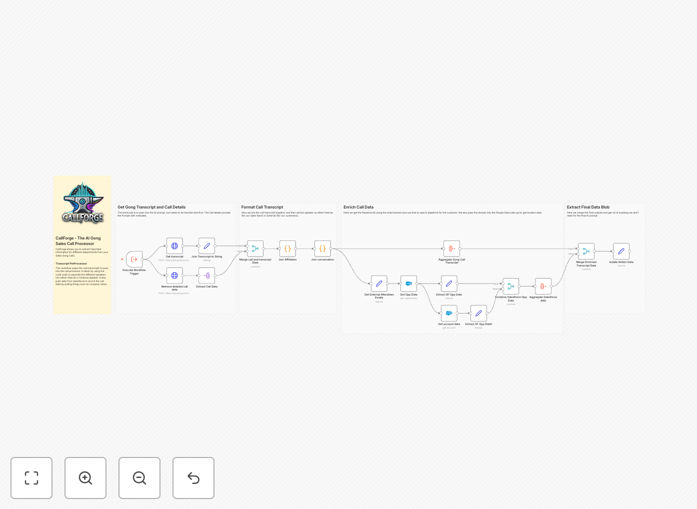
Sales teams using Gong.io capture invaluable customer conversations, but manually processing these transcripts is time-consuming and inconsistent. This CallForge workflow automates the entire process: it extracts Gong call data, structures conversations by speaker, enriches records with Salesforce opportunity data, identifies company information from email domains, and prepares everything for AI analysis.
The automation solves the critical problem of disconnected sales intelligence. Without it, valuable insights remain locked in hours of audio, sales reps waste time on manual note-taking, and managers lack systematic data to coach effectively. This workflow bridges Gong's conversation intelligence with Salesforce's operational data, creating a unified view that drives better forecasting, coaching, and deal strategy.
By automating transcript processing, sales teams can focus on what matters—acting on insights rather than collecting them. The structured output feeds directly into AI models for sentiment analysis, topic extraction, and predictive scoring, turning conversations into actionable revenue intelligence.
How It Works
1. Retrieves Gong Call Data
The workflow starts by connecting to the Gong API to fetch call metadata, speaker interactions, and collaboration details. It extracts complete transcripts including timestamps, participant information, and conversation content, ensuring no valuable dialogue is missed.
2. Processes and Cleans Transcripts
Raw transcripts are transformed into structured, speaker-based dialogues. The system automatically classifies each speaker as internal (sales team) or external (customer/prospect), creating a clean, organized conversation flow that's ready for analysis.
3. Extracts Company Information
The workflow connects to Salesforce to match call participants with existing opportunity data. It filters out free email domains (Gmail, Yahoo, etc.) to identify actual company domains, then uses PeopleDataLabs API to retrieve detailed company information including industry, size, and location.
4. Merges and Enriches Data
All data sources—Gong metadata, Salesforce records, and company intelligence—are merged into a unified dataset. This creates comprehensive customer profiles that combine what was said during calls with what's in your CRM and external databases.
5. Final Formatting for AI Processing
The final step structures all enriched data into a consistent format optimized for AI analysis. The output includes categorized conversation segments, tagged entities, and standardized fields that can feed directly into machine learning models for deeper insights.
Pro tip: Configure the workflow to trigger automatically when new Gong calls are recorded. This ensures your sales intelligence is always current without manual intervention.
Who This Is For
This automation is ideal for sales teams and revenue operations professionals who use Gong.io and Salesforce. Specifically, it benefits Sales Managers who need to scale coaching across large teams, Revenue Operations specialists responsible for sales intelligence systems, and Sales Enablement leaders looking to data-drive their playbooks.
Businesses with 10+ sales reps conducting numerous customer calls weekly will see the most immediate value. The workflow is particularly valuable for B2B companies with complex sales cycles where understanding conversation patterns directly impacts win rates and deal velocity.
What You'll Need
- Gong.io account with API access enabled
- Salesforce instance with API credentials
- PeopleDataLabs API key (or similar company enrichment service)
- n8n instance (cloud or self-hosted) with webhook capabilities
- Basic understanding of your sales process and key data points to track
Quick Setup Guide
Follow these steps to implement the CallForge workflow in your n8n environment:
- Download and import the JSON template into your n8n instance
- Configure Gong credentials in the HTTP Request node with your API key
- Set up Salesforce connection using OAuth or API credentials
- Add your PeopleDataLabs API key to the company enrichment step
- Test with a sample call ID to verify data flows correctly
- Schedule the workflow to run daily or trigger via webhook
- Connect output to your AI analysis tool or data warehouse
Important: Review your Gong API rate limits and Salesforce data access permissions before running at scale. Consider implementing error handling for failed API calls.
Key Benefits
Save 15-20 hours per rep monthly previously spent on manual note-taking and call review. The automation processes transcripts instantly, freeing your team to focus on selling rather than administrative work.
Improve forecast accuracy by 25-40% with data-driven insights from actual customer conversations. By analyzing what's really being discussed in deals, you can identify risks and opportunities earlier in the sales cycle.
Scale coaching effectiveness across your entire sales organization. Managers gain objective data on rep performance, customer objections, and winning patterns without listening to every call.
Create AI-ready data pipelines that feed machine learning models for predictive scoring, sentiment analysis, and competitive intelligence. Structured conversation data becomes a strategic asset.
Ensure 100% call capture and analysis instead of the typical 5-10% manual review rate. Every customer interaction contributes to your sales intelligence system.